
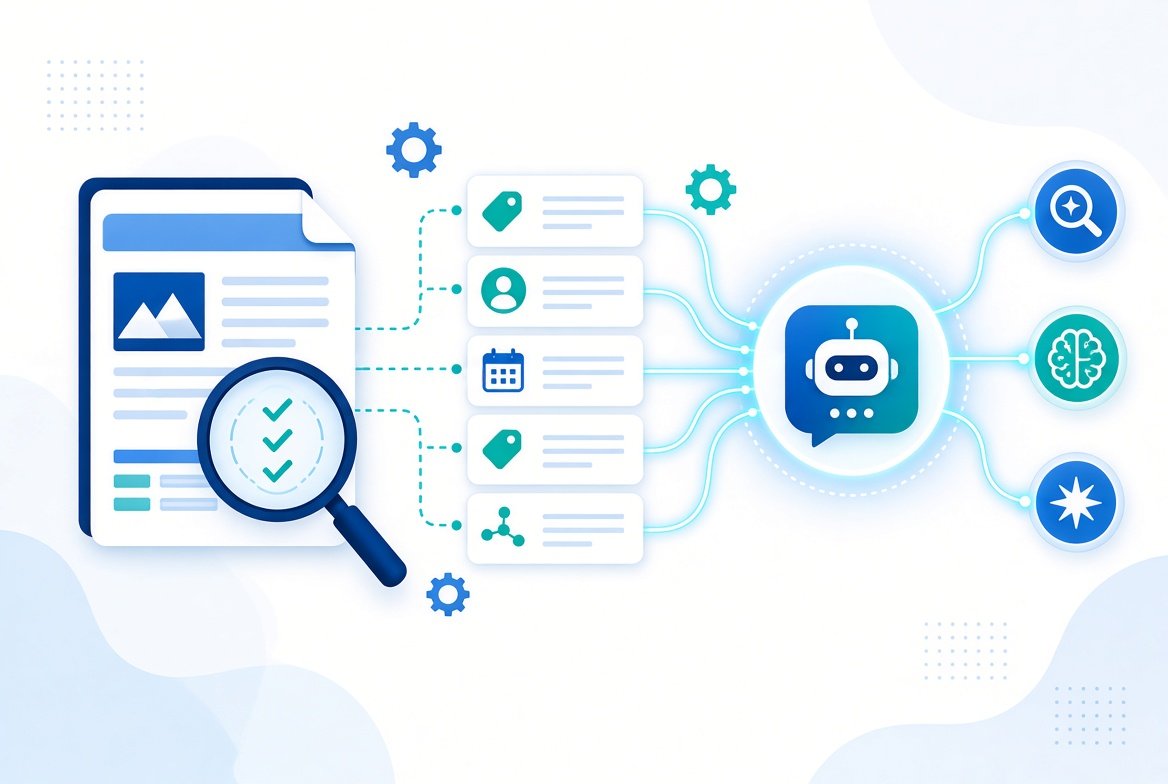
To optimize content for AI search engines, you need to write in a clear, structured format that directly answers user questions, back up claims with credible data, use proper schema markup, and build topical depth around a subject rather than just targeting a single keyword. AI search engines such as ChatGPT, Google AI Overviews, Perplexity, and Gemini do not simply crawl and rank pages the way traditional search engines do. Instead, they read across multiple sources, extract the most useful and trustworthy information, and generate a single conversational answer for the user. If your content is not built for this kind of extraction, it gets skipped, no matter how well it ranks in classic search results.
In this guide, we will walk through exactly how AI search engines evaluate content, what changes you need to make to your writing and website structure, and a complete action plan you can apply to any page on your site.
Traditional search engines work by matching keywords, analyzing backlinks, and ranking pages based on relevance and authority signals. AI search engines add another layer on top of that process. They break content into smaller chunks, evaluate each chunk for clarity and factual accuracy, and then decide whether it deserves to be included in a generated answer.
This means a few things change for content creators:
Understanding this shift is the first step toward writing content that actually performs in AI powered search results.
Before optimizing your content, it helps to understand what these systems are actually looking for when they scan a page. The table below breaks down the main evaluation factors and what each one means in practice.
| Evaluation Factor | What It Means | Why It Matters to AI Engines |
|---|---|---|
| Clarity of Answer | Is the question answered directly and early | Easier to extract and quote accurately |
| Structural Organization | Are headings and sections logically arranged | Helps the model understand context and hierarchy |
| Source Credibility | Does the content show real expertise or data | Builds trust before citation |
| Freshness | Is the information current and updated | Avoids citing outdated facts |
| Semantic Coverage | Does the page cover the topic in full depth | Reduces the need to pull from multiple sources |
| Structured Data | Is schema markup present | Gives machines a readable version of the page |
Keeping these six factors in mind while writing will naturally shift your content toward the format AI search engines prefer.
AI models scan the opening lines of a page to determine what the content is about and whether it directly addresses the query. Burying your main point three paragraphs deep, after a long introduction, reduces your chances of being picked up. Every page and every major section should open with a direct, factual answer, followed by supporting detail and context.
Proper heading structure allows AI crawlers to understand how your content is organized. A page should have a single main title, followed by logically nested subheadings that break the topic into digestible sections. Skipping levels or using headings inconsistently makes it harder for machines to map out the content structure. A team that specializes in on page SEO can help audit your existing pages and fix heading inconsistencies that may be holding your content back.
Since most AI search engines are designed to answer questions, structuring your content around real user queries increases the likelihood of citation. Instead of writing generic section titles, phrase them the way a person would actually ask them. For example, instead of a heading like Content Optimization Tips, use a heading like How Do You Optimize Content for AI Search Engines.
Schema markup gives search engines and AI systems a machine readable version of your page. FAQ schema, article schema, and organization schema all help AI crawlers quickly understand what your content covers, who published it, and why it should be trusted. This is one of the most overlooked technical steps in content optimization.
AI models reward pages that fully cover a subject rather than pages that repeat the same keyword phrase without adding new information. This means answering related subtopics, addressing common follow up questions, and using natural variations of your main topic throughout the page. Thorough keyword research helps identify these related subtopics before you start writing, so your content covers the full scope of what people are actually searching for.
Experience, expertise, authoritativeness, and trust remain central to how AI systems decide which sources to cite. Author credentials, original research, real case studies, and transparent sourcing all strengthen this signal. Working with experienced content writing services ensures your published material reflects genuine expertise rather than generic, templated writing.
AI search engines favor current, accurate information. A page that has not been touched in years, especially one covering a topic that changes frequently, is far less likely to be trusted. Set a schedule to review and refresh your most important pages every few months.
Use this checklist when writing or editing any page you want AI search engines to pick up and cite.
Writing great content is only part of the equation. The technical foundation of your website plays a major role in whether AI crawlers can access and understand your pages at all.
A slow or poorly optimized website can prevent crawlers from properly indexing your content, regardless of how well it is written. Fast loading times and mobile responsiveness are baseline requirements.
A logically organized website, with clear categories and internal linking, helps AI crawlers understand how different pieces of content relate to one another. This is especially important for larger websites with dozens or hundreds of pages.
Beyond basic schema, structured data should be applied consistently across product pages, service pages, and blog content. This creates a uniform, machine readable dataset that AI models can pull from reliably.
Partnering with a full service digital marketing agency that understands both the content and technical sides of AI search optimization makes it far easier to keep every part of this system working together.
Since AI search engines do not provide traditional ranking positions, measuring success requires a slightly different approach. The table below outlines useful indicators to track.
| Metric | What to Track | How to Monitor It |
|---|---|---|
| AI Citation Appearances | How often your content is referenced in AI generated answers | Manually test relevant queries across major AI tools |
| Branded Search Growth | Increase in searches for your brand name | Search console and analytics data |
| Long Tail Query Traffic | Traffic from natural, question based searches | Organic search reports |
| Engagement Metrics | Time on page and scroll depth | Website analytics tools |
| Featured Snippet Appearances | Whether content appears in traditional snippet boxes | Search engine results tracking |
Reviewing these metrics on a monthly basis gives a realistic view of whether your optimization efforts are actually improving visibility across AI driven search experiences.
What does it mean to optimize content for AI search engines?
It means structuring, writing, and formatting content so that AI tools like ChatGPT, Gemini, and Google AI Overviews can easily understand, trust, and cite it within their generated answers.
Is optimizing for AI search engines different from traditional SEO?
Yes, though the two overlap significantly. Traditional SEO focuses on ranking pages in search results, while AI search optimization focuses on being extracted and quoted directly inside AI generated responses.
Do I need to rewrite all my existing content for AI search engines?
Not necessarily. Start by identifying your highest value pages and updating their structure, clarity, and schema markup first, then expand to the rest of the website over time.
How important is schema markup for AI search visibility?
It is very important. Structured data gives AI crawlers a machine readable version of your content, making it significantly easier for them to understand and trust what your page is about.
Can short content perform well in AI search engines?
Short content can perform well if it answers a specific question clearly and completely, but broader topics generally require more depth to be seen as a trustworthy, comprehensive source.
How often should I update my content for AI search optimization?
Reviewing and refreshing important pages every three to six months is a reasonable baseline, though fast changing topics may require more frequent updates.
Does social proof or brand mentions affect AI search visibility?
Yes. Consistent brand mentions, citations from other reputable sources, and active engagement across platforms all contribute to how AI models assess the trustworthiness of your content.
Learning how to optimize content for AI search engines comes down to writing with clarity, structuring information logically, backing up claims with real expertise, and making sure your website is technically sound enough for AI crawlers to access and understand. As more people rely on AI tools to research, compare, and make decisions, the brands that adapt their content strategy now will be the ones that stay visible and trusted well into the future.