Build an Instagram Ad Funnel That Turns Followers into Buyers
 Build an Instagram Ad Funnel
If you have ever run a single Instagram ad, watched a decent number of people engage with it, and then wondered why so few of them actually bought anything, you have run into the single biggest reason most Instagram advertising fails. It is not a bad ad. It is the absence of Instagram Ad Funnel.
A single ad, no matter how well designed, cannot do the full job of turning a total stranger into a paying customer. People need to notice you, get curious about you, trust you enough to consider buying, and then finally get the nudge that pushes them to act. Trying to force all of that into one ad is like expecting someone to propose marriage on a first date. It rarely works, and when it does, it is more luck than strategy :Instagram Ad Funnel.
This guide walks you through exactly how to build a real Instagram ad funnel, one that takes cold scroll-stoppers and moves them step by step toward becoming buyers, using a structure that is practical, proven, and something you can start setting up today.
Why a Single Ad Is Not Enough Anymore
Instagram in 2026 is a crowded, fast moving environment. People scroll through hundreds of pieces of content in minutes, and your ad is competing with everything else fighting for that same attention. Here is why relying on one ad to do everything no longer works.
-
- Cold audiences rarely convert on the first exposure, since trust has not been built yet and the offer has not had time to sink in.
-
- Different people are at different stages of readiness, meaning some need education first while others are ready to buy immediately.
-
- Rising ad costs mean wasted impressions hurt more, so every dollar needs to move someone closer to a purchase, not just generate a passive view.
-
- Algorithm signals improve when your funnel is structured properly, since Meta can optimize each stage for its specific goal rather than trying to force one campaign to do everything at once.
A proper funnel solves all of these problems by breaking the customer journey into clear stages, each with its own purpose, message, and audience.
The Three Core Stages of an Instagram Ad Funnel
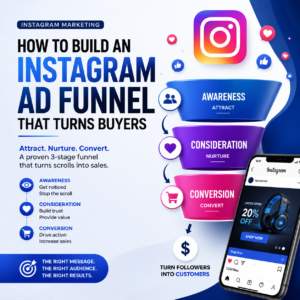
Before diving into tactics, it helps to understand the overall structure you are building toward. Every effective Instagram ad funnel is built around three core stages.
Top of Funnel: Awareness
This is where cold, unfamiliar audiences first discover your brand. The goal here is not to sell, it is to stop the scroll, spark curiosity, and startbuilding recognition.
Middle of Funnel: Instagram Ad Funnel
This is where people who have shown some interest get nurtured further. They already know who you are, and now the goal is building enough trust and desire that buying starts to feel like a natural next step.
Bottom of Funnel: Conversion
This is where warm, highly interested people get the final push to actually buy. The messaging here shifts from storytelling and trust building to direct offers, urgency, and clear calls to action.
Skipping any of these stages, or trying to compress them into one single campaign, is exactly why so many Instagram ad accounts struggle to turn engagement into real revenue.
1. Use Native, Attention Grabbing Creative
At this stage, your content is competing directly with organic posts and Reels from accounts people already follow. Overly polished, obviously promotional content tends to get scrolled past instantly.
-
- Use short form vertical video that feels native to the platform rather than a traditional advertisement.
-
- Open with a strong hook within the first one to two seconds, since this is where most people decide whether to keep watching.
-
- Lean into relatable problems, surprising facts, or bold statements rather than leading with a sales pitch.
-
- Test multiple creative angles simultaneously, since you often will not know which hook resonates until you see real data.
2. Target Broad, Interest Based, or Lookalike Cold Audiences
Top of funnel campaigns should cast a reasonably wide net rather than narrowing too aggressively before you know what resonates.
-
- Start with broad targeting and let Meta’s algorithm find the right people based on your creative’s performance signals.
-
- Layer in interest based audiences relevant to your niche as a secondary test.
-
- If you have existing customer data, build a lookalike audience from your best customers to find similar cold prospects.
3. Optimize for Engagement, Not Purchases, at This Stage
It might feel counterintuitive, but pushing for direct purchases from a completely cold audience often backfires, since Meta struggles to optimize efficiently without enough conversion signal at this early stage.
-
- Optimize top of funnel campaigns for video views, engagement, or landing page views rather than purchase events.
-
- Use this stage to build your retargeting pools for the next funnel stage, treating every engaged viewer as a future opportunity.
-
- Keep your budget here focused on volume and reach rather than expecting immediate return on ad spend.
Stage 2: Building the Middle of Funnel That Builds Trust
4. Retarget Everyone Who Engaged at the Top of Funnel
This is where your funnel actually starts to function as a funnel rather than a series of disconnected ads.
-
- Build a custom audience of people who watched a significant portion of your top of funnel video content.
-
- Include people who visited your website or landing page but did not take further action.
-
- Include people who engaged with your Instagram profile, comments, or saved a post.
5. Shift Your Messaging Toward Trust and Value
At this stage, people already know you exist. The goal now is answering their unspoken objections and building enough confidence that they consider actually buying from you.
-
- Use testimonials, reviews, or social proof to demonstrate that real people trust your product or service.
-
- Show your product in use, addressing common questions or concerns people might still have.
-
- Share behind the scenes content or your brand story to build a more personal connection.
-
- Address common objections directly in your ad copy, such as concerns about quality, price, or shipping.
6. Introduce a Soft Offer or Lead Magnet
Not everyone at this stage is ready to make a full purchase, so offering something lower commitment can keep them moving through the funnel instead of dropping off.
-
- Offer a discount code in exchange for an email signup.
-
- Provide a free guide, checklist, or resource relevant to your product or service.
-
- Invite them to a webinar, demo, or consultation if you sell a higher ticket product or service.
Stage 3: Building the Bottom of Funnel That Converts
7. Retarget High Intent Actions Specifically
By this stage, your audience should be narrowed down to the people who have shown genuine buying signals, not just casual engagement.
-
- Target people who added to cart but did not complete checkout.
-
- Target people who visited your pricing or product page multiple times.
-
- Target people who opened your lead form but did not submit it.
-
- Target email subscribers or lead magnet downloaders who have not yet purchased.
8. Use Direct, Urgency Driven Messaging
At this stage, subtlety is no longer your friend. People here already know your brand and have shown real interest, so it is time to give them a clear reason to act now rather than later.
-
- Highlight limited time discounts or promotions with a clear deadline.
-
- Use scarcity messaging, such as limited stock or limited spots, when genuinely applicable.
-
- Make your call to action extremely clear, whether that is shop now, book a call, or claim your discount.
-
- Remove friction wherever possible, such as offering free shipping or a simplified checkout process.
9. Use Story Ads for the Final Push
As discussed in comparing Instagram ad formats, Story ads tend to shine at exactly this stage of the funnel, since the format naturally encourages quick, active taps toward a call to action.
-
- Use Story ads specifically for retargeting bottom of funnel audiences with a direct, urgent offer.
-
- Keep messaging short and punchy, since attention spans in Stories are naturally brief.
-
- Include a strong, visible call to action button that makes the next step obvious.
Stage 4: Post Purchase, the Stage Most Funnels Forget
A genuinely complete funnel does not stop the moment someone buys. What happens after the purchase determines whether that customer becomes a one time buyer or a long term source of repeat revenue.
-
- Build a custom audience of recent purchasers and exclude them from your cold and mid funnel campaigns to avoid wasted spend.
-
- Create a dedicated campaign introducing complementary products or a loyalty offer to encourage repeat purchases.
-
- Retarget purchasers a few weeks later with a reminder or restock message if your product has a natural repurchase cycle.
-
- Encourage reviews or user generated content from recent buyers, which then feeds back into your top of funnel social proof creative.
This closes the loop, turning your funnel into an ongoing cycle rather than a one way street that ends the moment a sale happens.
How to Structure Your Campaigns and Budget Across the Funnel
Understanding the stages is one thing, actually structuring your Meta Ads Manager account to reflect them is another. Here is a practical starting framework.
-
- Allocate roughly 50 to 60 percent of your budget to top of funnel awareness campaigns, since this stage feeds everything else.
-
- Allocate roughly 25 to 30 percent to middle of funnel retargeting and trust building campaigns.
-
- Allocate the remaining 15 to 20 percent to bottom of funnel conversion campaigns targeting your highest intent audiences.
-
- Adjust this split over time based on actual performance, shifting more budget toward whichever stage shows the strongest return as your data accumulates.
A funnel is only as good as your ability to measure what is actually happening at each stage. Without proper tracking, you are essentially flying blind and guessing which part of your funnel needs attention.
-
- Meta Pixel and Conversions API, set up correctly on your website so every stage of the customer journey, from page view to purchase, is being captured accurately.
-
- Meta Events Manager, used regularly to confirm your events are firing properly and there are no gaps in your data collection.
-
- UTM parameters on every ad link, so you can cross reference performance in Google Analytics or your ecommerce platform alongside what Meta reports.
-
- A funnel specific reporting view in Ads Manager, broken down by campaign objective, so you can clearly see how top, middle, and bottom funnel campaigns are each performing rather than looking at one blended account overview.
-
- Customer relationship management or email platform data, to track how leads move from initial capture through to actual purchase, especially for longer consideration cycles.
Checking these consistently lets you catch weak points early, whether that means your top of funnel is not generating enough engaged viewers, or your bottom of funnel offer is not compelling enough to convert an already warm audience.
A Real World Example of a Working Funnel
Imagine a skincare brand launching a new serum. Here is what a properly structured funnel might look like in practice from start to finish.
-
- A top of funnel Reels campaign runs broad targeting with a native feeling video showing a relatable skin concern, ending with a soft introduction to the product, optimized for video views.
-
- Anyone who watches at least fifty percent of that video gets moved into a middle of funnel retargeting campaign featuring customer testimonials and a short educational video explaining the ingredients.
-
- A lead magnet offer, such as a ten percent discount for signing up to an email list, is introduced at this stage to capture contact information from people not quite ready to buy.
-
- People who visited the product page but did not purchase, along with email subscribers who have not converted, are moved into a bottom of funnel Story ad campaign featuring a limited time offer with a clear countdown and swipe up link.
-
- After purchase, buyers are excluded from all acquisition campaigns and instead enter a separate post purchase campaign introducing a complementary product a few weeks later.
This entire structure runs simultaneously as an interconnected system, with each stage feeding the next, rather than existing as isolated, disconnected campaigns competing for the same audience and budget.
Common Mistakes That Break an Instagram Ad Funnel
-
- Jumping straight to conversion campaigns without building any top or middle of funnel audience first, leaving Meta with almost no warm data to optimize toward.
-
- Using identical messaging across every stage, missing the chance to build trust before asking for the sale.
-
- Forgetting to exclude purchasers from earlier funnel stages, wasting budget on people who already converted.
-
- Under budgeting the top of funnel, which starves the rest of the funnel of new prospects to nurture and convert.
-
- Ignoring the post purchase stage entirely, missing an easy opportunity to increase customer lifetime value.
-
- Changing the funnel structure too frequently, not giving each stage enough time to gather meaningful data before making changes.
Signs Your Funnel Needs Adjustment
Even a well built funnel needs regular check ins, since audience behavior, competition, and creative fatigue all shift over time. Watch for these warning signs.
-
- Top of funnel engagement dropping steadily, which often signals creative fatigue and a need for fresh video content.
-
- A shrinking middle of funnel retargeting pool, meaning your top of funnel campaigns are not generating enough new engaged viewers to feed the next stage.
-
- High click through rates but low conversion rates at the bottom of funnel, which often points to a mismatch between your offer and what your audience actually needs, or friction somewhere in your checkout process.
-
- Rising frequency in retargeting campaigns, indicating your warm audience is seeing the same message too often and needs new creative or a different angle.
-
- A growing gap between cost per lead and cost per purchase, which can suggest your middle funnel is capturing interest but not building enough trust to carry people through to an actual sale.
Reviewing these signals every couple of weeks, rather than waiting for a dramatic performance drop, keeps your funnel running smoothly and helps you catch small issues before they compound into bigger problems.
Frequently Asked Questions
1. How long does it take to see results from an Instagram ad funnel?
Most funnels need at least two to three weeks to gather enough data across all stages, since middle and bottom funnel campaigns depend on retargeting pools built from top of funnel engagement.
2. Do I need a large budget to run a full Instagram ad funnel?
Not necessarily. Even a modest daily budget can support a basic three stage funnel if it is structured properly, though larger budgets allow faster data collection and quicker optimization.
3. Can I run all three funnel stages within one campaign?
It is possible using Advantage+ campaigns with broad targeting, but a manually structured funnel with separate campaigns for each stage generally gives you clearer control and more precise messaging for each audience.
4. What is the biggest mistake businesses make when building an Instagram funnel?
Skipping straight to bottom of funnel conversion ads without first building awareness and trust, which usually results in poor performance since cold audiences rarely convert on a direct sales pitch alone.
5. How often should I refresh my funnel creative?
Top of funnel creative should be refreshed most often, roughly every one to two weeks, since it faces the broadest audience and fatigues faster. Middle and bottom funnel creative can last slightly longer since retargeting pools are smaller and refresh naturally as new people enter each stage.
6. Should Reels or Stories be used at each funnel stage?
Reels tend to work best at the top of funnel for reach and awareness, while Stories tend to work best at the bottom of funnel for direct, urgency driven conversion pushes, though testing both at each stage is worthwhile for your specific audience.
Final Thoughts
Building an Instagram ad funnel is not about running more ads, it is about running the right ad at the right stage for the right person. When you guide someone from a scroll stopping introduction, through trust building content, and finally toward a clear, urgent offer, you are working with human behavior instead of against it. That is what consistently turns casual scrollers into actual buyers, and it is a structure you can start building today, one stage at a time.
