How to market Gen-Z on snapchat: Guide 2026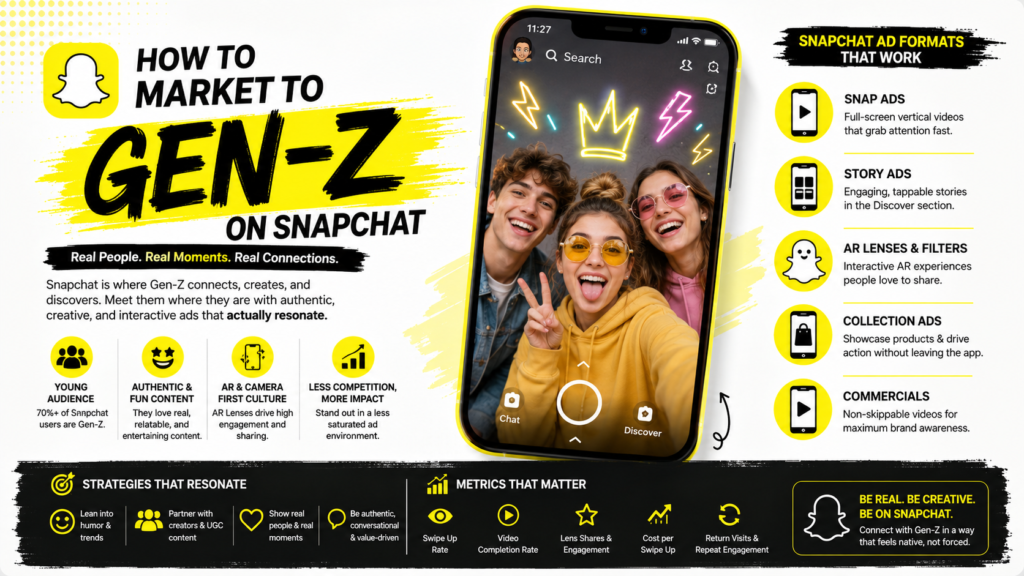
Market Gen-Z on snapchat
If your brand has been pouring budget into the usual social platforms and still feels like it is missing the Gen-Z audience entirely, there is a good chance Snapchat is the piece you have been overlooking. While a lot of marketers wrote Snapchat off years ago as an app just for disappearing selfies, it has quietly become one of the most effective places to genuinely reach and engage younger audiences, especially the notoriously hard to capture Gen-Z demographic.
Gen-Z does not respond to marketing the way older generations do. They can spot a forced, overly polished ad from a mile away, and they scroll past anything that feels like it is trying too hard. Snapchat, with its playful, personal, camera first culture, offers a genuine opportunity to reach this audience on their own terms, but only if you understand how to advertise there the right way.
This guide breaks down exactly how brands can effectively capture Gen-Z attention through Snapchat advertising, covering the platform’s unique culture, the ad formats that actually work, and the strategic approach needed to avoid coming across as an outdated brand trying too hard to be cool.
Why Snapchat Still Matters for Reaching Gen-Z
Before diving into strategy, it is worth understanding why Snapchat deserves a real place in your marketing plan rather than being treated as an afterthought.
- Snapchat remains one of the primary daily habits for Gen-Z users, with a large percentage of its active user base falling within this exact demographic.
- The platform’s camera first culture creates a different mindset, since users open the app expecting personal, authentic content rather than polished advertising.
- Augmented reality features are deeply embedded in the platform, giving brands creative tools that simply do not exist in the same way on other platforms.
- Snapchat’s audience tends to be less saturated with ads compared to Instagram or TikTok, meaning your message has a genuine chance to stand out rather than getting lost in an oversaturated feed.
Brands that dismiss Snapchat as outdated are often missing a real opportunity to reach an audience that increasingly tunes out generic advertising elsewhere.
Understanding the Gen-Z Mindset Before You Advertise
Effective Snapchat advertising starts with genuinely understanding how Gen-Z thinks about brands and content, not just knowing the platform’s technical features.
- They value authenticity over polish, often trusting content that feels real and slightly imperfect more than something that looks like a traditional advertisement.
- They expect two way interaction, preferring brands that feel approachable and responsive rather than distant and corporate.
- They care about values and identity, gravitating toward brands that reflect their personal interests, humor, or causes they care about.
- They have extremely short patience for anything that feels like a hard sell, often disengaging instantly from content that pushes too aggressively toward a purchase.
Keeping this mindset in view while building your Snapchat strategy will shape almost every decision that follows, from creative style to campaign objective.
1. Snap Ads
These are full screen, vertical video ads that appear between friends’ stories and content, similar in feel to Instagram Stories ads but within Snapchat’s own native environment.
- Keep videos short, generally under fifteen seconds, matching the platform’s fast paced content consumption habits.
- Lead with a strong visual hook in the first couple of seconds to prevent an instant swipe past.
- Use casual, native feeling footage rather than overly produced commercial style content.
2. Story Ads
Story ads appear within the Discover section, giving brands a dedicated tile that users can tap into, similar to a mini branded content hub.
- Use this format for storytelling that goes slightly deeper than a single quick ad, such as showcasing a product line or a brand narrative.
- Keep individual snaps within the story short and visually engaging, since attention spans remain brief even within this slightly longer format.
3. AR Lenses and Filters
This is one of Snapchat’s most unique and powerful advertising tools, letting users interact directly with your brand through augmented reality effects applied to their own selfies or surroundings.
- Create playful, shareable lenses that align with your brand identity without feeling like an obvious advertisement.
- Encourage users to share their lens creations, turning the ad experience itself into organic, user generated promotion.
- Tie lenses to campaigns, product launches, or seasonal moments to keep the experience feeling timely and relevant.
4. Collection Ads
These allow brands to showcase multiple products within a single ad unit, letting users browse directly from the ad itself, which works particularly well for ecommerce brands targeting Gen-Z shoppers.
- Use eye catching product imagery that feels stylish and current rather than generic stock photography.
- Keep the browsing experience simple, since Gen-Z users expect fast, frictionless interactions.
5. Commercials
These are non skippable video ads shown within premium Snapchat content, offering guaranteed full view completion, useful for brand awareness campaigns where message delivery matters more than immediate interaction.
- Reserve this format for high impact brand storytelling rather than direct response offers.
- Keep production quality high while still maintaining an authentic, relatable tone rather than a purely corporate feel.
Creative Strategies That Actually Resonate With Gen-Z
5. Lean Into Humor and Trends
Gen-Z engages heavily with humor, memes, and platform specific trends. Brands willing to participate in this culture, without forcing it awkwardly, tend to see significantly stronger engagement.
- Monitor trending formats, sounds, and cultural moments within Snapchat and adapt your creative accordingly.
- Avoid trying to force a trend that does not genuinely fit your brand voice, since this often reads as inauthentic and can backfire.
- Use self aware, slightly self deprecating humor when appropriate, since Gen-Z tends to respond well to brands that do not take themselves too seriously.
6. Prioritize User Generated and Creator Content
Content that feels like it was made by a real person, rather than a corporate marketing team, consistently performs better with this audience.
- Partner with creators who already have genuine, engaged Gen-Z followings rather than choosing partners based purely on follower count.
- Encourage creators to maintain their own authentic voice rather than reading a heavily scripted brand message.
- Repurpose strong performing organic creator content into paid ads to extend its reach further.
7. Show Real People, Not Just Products
Ads that center a product alone, without any human context, tend to feel flat and forgettable to younger audiences who respond more strongly to relatable people and situations.
- Feature real customers, creators, or employees rather than relying solely on studio product shots.
- Show your product being used in a natural, everyday context rather than an idealized, unrealistic setting.
8. Keep Messaging Direct and Value Focused
While the tone can be playful, the actual value proposition still needs to be clear. Gen-Z appreciates brands that respect their time and get to the point.
- Clearly communicate what makes your product or offer worth paying attention to within the first few seconds.
- Avoid burying your core message under too much stylistic flair that leaves viewers unsure what you are actually offering.
Targeting and Campaign Strategy for Reaching Gen-Z on Snapchat
9. Use Snapchat’s Detailed Demographic and Interest Targeting
Snapchat offers robust targeting options that let you narrow in on age ranges, interests, and behaviors relevant specifically to younger audiences.
- Start with Snapchat’s built in age and interest targeting to reach core Gen-Z segments directly.
- Layer in lookalike audiences built from your existing engaged customers or website visitors for a more refined match.
- Test multiple audience segments simultaneously, since Gen-Z interests can vary significantly even within the same broad age range.
10. Optimize for Engagement Before Pushing Direct Conversions
Similar to other platforms, pushing straight for a purchase from a completely cold Gen-Z audience often underperforms compared to first building familiarity and engagement.
- Use top of funnel campaigns optimized for video views or swipe ups to introduce your brand.
- Retarget engaged users with more direct offers once they have shown initial interest.
- Build a retargeting pool from lens interactions, video views, and story engagement to nurture toward eventual conversion.
Metrics That Actually Matter When Advertising to Gen-Z on Snapchat
Standard advertising metrics do not always tell the full story when it comes to younger audiences, since engagement and brand affinity often matter as much as, or more than, immediate clicks. Here is what to prioritize tracking.
- Swipe up rate, showing what percentage of viewers took action after watching your ad, which reflects how compelling your call to action genuinely is.
- Video completion rate, revealing whether your creative holds attention through to the end or loses viewers partway through.
- Lens engagement and share rate, particularly relevant for AR campaigns, since a high share rate signals your lens is generating organic reach beyond your paid spend.
- Cost per swipe up or cost per engagement, giving you a clearer efficiency picture than raw impressions alone.
- Story completion rate, useful for understanding whether your story ad content is compelling enough to keep users tapping through to the end.
- Return visits or repeat engagement, which can indicate genuine brand affinity building over time rather than a single, disconnected interaction.
Reviewing these metrics regularly, rather than defaulting to impressions or reach alone, gives you a much clearer picture of whether your content is genuinely resonating with a Gen-Z audience or simply being seen and scrolled past.
Building a Content Calendar Around Gen-Z Culture
Because trends and cultural moments move quickly within this audience, having a loosely structured but responsive content calendar helps keep your Snapchat presence feeling current rather than stale.
- Plan core campaign content around major cultural moments, seasonal events, or product launches relevant to your brand.
- Leave flexible space within your calendar to react quickly to emerging trends, memes, or platform features, since rigid long term planning can leave you missing timely opportunities.
- Batch produce a mix of polished and casual, native feeling content so you always have material ready to adapt to what is currently resonating.
- Review performance weekly rather than monthly, since Gen-Z attention and trends shift fast enough that monthly reviews can miss important shifts in what is working.
Balancing Brand Consistency With Platform Native Content
One of the trickier challenges brands face on Snapchat is maintaining recognizable brand identity while still fitting naturally into the platform’s casual culture. Here is how to strike that balance effectively.
- Keep core brand elements, like color palette, logo, or tone of voice, consistent enough that your content is still recognizably yours.
- Allow the format and delivery to flex toward Snapchat’s native style, even if that means a rougher, less polished look than what you use on other channels.
- Test how far you can push toward native, casual content before it starts to feel disconnected from your broader brand identity, since the right balance varies by brand and audience.
- Involve younger team members or actual Gen-Z consumers in reviewing creative before launch, since an outside perspective often catches tone issues that internal teams miss.
Budget Allocation Guidance for a Gen-Z Focused Snapchat Strategy
Deciding how to split budget across formats and funnel stages can feel overwhelming at first. Here is a practical starting point you can adjust based on your own performance data over time.
- Allocate a meaningful portion, roughly 40 to 50 percent, to top of funnel Snap Ads and Story Ads focused on brand awareness and initial engagement, since this stage feeds everything else.
- Reserve 20 to 30 percent for AR lens campaigns, particularly around key moments like product launches or seasonal campaigns, since these tend to generate the strongest organic amplification when done well.
- Set aside 15 to 20 percent for creator partnerships, whether that means sponsoring existing creator content or collaborating on co branded campaigns.
- Keep a smaller portion, around 10 to 15 percent, for retargeting engaged users with more direct offers or conversion focused messaging.
As with any budget framework, treat this as a starting point rather than a fixed rule, adjusting the split based on which formats and campaigns are genuinely driving results for your specific brand and audience over time.
Common Mistakes Brands Make When Advertising to Gen-Z on Snapchat
- Recycling ads from other platforms without adapting them, using overly polished content that clashes with Snapchat’s native, casual culture.
- Ignoring AR lenses and filters entirely, missing one of the platform’s most distinctive and effective engagement tools.
- Pushing hard sales messaging too early, before building any familiarity or trust with a cold audience.
- Choosing creators based on follower count alone, rather than genuine audience alignment and authentic engagement.
- Underestimating how quickly Gen-Z can detect inauthenticity, leading to campaigns that feel forced or embarrassingly out of touch.
- Failing to monitor and adapt to trends, running the same creative for too long in a culture that moves and shifts quickly.
Why Snapchat Still Matters for Reaching Gen-Z
Before diving into strategy, it is worth understanding why Snapchat deserves a real place in your marketing plan rather than being treated as an afterthought.
- Snapchat remains one of the primary daily habits for Gen-Z users, with a large percentage of its active user base falling within this exact demographic.
- The platform’s camera first culture creates a different mindset, since users open the app expecting personal, authentic content rather than polished advertising.
- Augmented reality features are deeply embedded in the platform, giving brands creative tools that simply do not exist in the same way on other platforms.
- Snapchat’s audience tends to be less saturated with ads compared to Instagram or TikTok, meaning your message has a genuine chance to stand out rather than getting lost in an oversaturated feed.
Brands that dismiss Snapchat as outdated are often missing a real opportunity to reach an audience that increasingly tunes out generic advertising elsewhere.
Understanding the Gen-Z Mindset Before You Advertise
Effective Snapchat advertising starts with genuinely understanding how Gen-Z thinks about brands and content, not just knowing the platform’s technical features.
- They value authenticity over polish, often trusting content that feels real and slightly imperfect more than something that looks like a traditional advertisement.
- They expect two way interaction, preferring brands that feel approachable and responsive rather than distant and corporate.
- They care about values and identity, gravitating toward brands that reflect their personal interests, humor, or causes they care about.
- They have extremely short patience for anything that feels like a hard sell, often disengaging instantly from content that pushes too aggressively toward a purchase.
Keeping this mindset in view while building your Snapchat strategy will shape almost every decision that follows, from creative style to campaign objective.
Snapchat Ad Formats That Work Well for Reaching Gen-Z
1. Snap Ads
These are full screen, vertical video ads that appear between friends’ stories and content, similar in feel to Instagram Stories ads but within Snapchat’s own native environment.
- Keep videos short, generally under fifteen seconds, matching the platform’s fast paced content consumption habits.
- Lead with a strong visual hook in the first couple of seconds to prevent an instant swipe past.
- Use casual, native feeling footage rather than overly produced commercial style content.
2. Story Ads
Story ads appear within the Discover section, giving brands a dedicated tile that users can tap into, similar to a mini branded content hub.
- Use this format for storytelling that goes slightly deeper than a single quick ad, such as showcasing a product line or a brand narrative.
- Keep individual snaps within the story short and visually engaging, since attention spans remain brief even within this slightly longer format.
3. AR Lenses and Filters
This is one of Snapchat’s most unique and powerful advertising tools, letting users interact directly with your brand through augmented reality effects applied to their own selfies or surroundings.
- Create playful, shareable lenses that align with your brand identity without feeling like an obvious advertisement.
- Encourage users to share their lens creations, turning the ad experience itself into organic, user generated promotion.
- Tie lenses to campaigns, product launches, or seasonal moments to keep the experience feeling timely and relevant.
4. Collection Ads
These allow brands to showcase multiple products within a single ad unit, letting users browse directly from the ad itself, which works particularly well for ecommerce brands targeting Gen-Z shoppers.
- Use eye catching product imagery that feels stylish and current rather than generic stock photography.
- Keep the browsing experience simple, since Gen-Z users expect fast, frictionless interactions.
5. Commercials
These are non skippable video ads shown within premium Snapchat content, offering guaranteed full view completion, useful for brand awareness campaigns where message delivery matters more than immediate interaction.
- Reserve this format for high impact brand storytelling rather than direct response offers.
- Keep production quality high while still maintaining an authentic, relatable tone rather than a purely corporate feel.
Creative Strategies That Actually Resonate With Gen-Z
5. Lean Into Humor and Trends
Gen-Z engages heavily with humor, memes, and platform specific trends. Brands willing to participate in this culture, without forcing it awkwardly, tend to see significantly stronger engagement.
- Monitor trending formats, sounds, and cultural moments within Snapchat and adapt your creative accordingly.
- Avoid trying to force a trend that does not genuinely fit your brand voice, since this often reads as inauthentic and can backfire.
- Use self aware, slightly self deprecating humor when appropriate, since Gen-Z tends to respond well to brands that do not take themselves too seriously.
6. Prioritize User Generated and Creator Content
Content that feels like it was made by a real person, rather than a corporate marketing team, consistently performs better with this audience.
- Partner with creators who already have genuine, engaged Gen-Z followings rather than choosing partners based purely on follower count.
- Encourage creators to maintain their own authentic voice rather than reading a heavily scripted brand message.
- Repurpose strong performing organic creator content into paid ads to extend its reach further.
7. Show Real People, Not Just Products
Ads that center a product alone, without any human context, tend to feel flat and forgettable to younger audiences who respond more strongly to relatable people and situations.
- Feature real customers, creators, or employees rather than relying solely on studio product shots.
- Show your product being used in a natural, everyday context rather than an idealized, unrealistic setting.
8. Keep Messaging Direct and Value Focused
While the tone can be playful, the actual value proposition still needs to be clear. Gen-Z appreciates brands that respect their time and get to the point.
- Clearly communicate what makes your product or offer worth paying attention to within the first few seconds.
- Avoid burying your core message under too much stylistic flair that leaves viewers unsure what you are actually offering.
Targeting and Campaign Strategy for Reaching Gen-Z on Snapchat
9. Use Snapchat’s Detailed Demographic and Interest Targeting
Snapchat offers robust targeting options that let you narrow in on age ranges, interests, and behaviors relevant specifically to younger audiences.
- Start with Snapchat’s built in age and interest targeting to reach core Gen-Z segments directly.
- Layer in lookalike audiences built from your existing engaged customers or website visitors for a more refined match.
- Test multiple audience segments simultaneously, since Gen-Z interests can vary significantly even within the same broad age range.
10. Optimize for Engagement Before Pushing Direct Conversions
Similar to other platforms, pushing straight for a purchase from a completely cold Gen-Z audience often underperforms compared to first building familiarity and engagement.
- Use top of funnel campaigns optimized for video views or swipe ups to introduce your brand.
- Retarget engaged users with more direct offers once they have shown initial interest.
- Build a retargeting pool from lens interactions, video views, and story engagement to nurture toward eventual conversion.
Metrics That Actually Matter When Advertising to Gen-Z on Snapchat
Standard advertising metrics do not always tell the full story when it comes to younger audiences, since engagement and brand affinity often matter as much as, or more than, immediate clicks. Here is what to prioritize tracking.
- Swipe up rate, showing what percentage of viewers took action after watching your ad, which reflects how compelling your call to action genuinely is.
- Video completion rate, revealing whether your creative holds attention through to the end or loses viewers partway through.
- Lens engagement and share rate, particularly relevant for AR campaigns, since a high share rate signals your lens is generating organic reach beyond your paid spend.
- Cost per swipe up or cost per engagement, giving you a clearer efficiency picture than raw impressions alone.
- Story completion rate, useful for understanding whether your story ad content is compelling enough to keep users tapping through to the end.
- Return visits or repeat engagement, which can indicate genuine brand affinity building over time rather than a single, disconnected interaction.
Reviewing these metrics regularly, rather than defaulting to impressions or reach alone, gives you a much clearer picture of whether your content is genuinely resonating with a Gen-Z audience or simply being seen and scrolled past.
Building a Content Calendar Around Gen-Z Culture
Because trends and cultural moments move quickly within this audience, having a loosely structured but responsive content calendar helps keep your Snapchat presence feeling current rather than stale.
- Plan core campaign content around major cultural moments, seasonal events, or product launches relevant to your brand.
- Leave flexible space within your calendar to react quickly to emerging trends, memes, or platform features, since rigid long term planning can leave you missing timely opportunities.
- Batch produce a mix of polished and casual, native feeling content so you always have material ready to adapt to what is currently resonating.
- Review performance weekly rather than monthly, since Gen-Z attention and trends shift fast enough that monthly reviews can miss important shifts in what is working.
Balancing Brand Consistency With Platform Native Content
One of the trickier challenges brands face on Snapchat is maintaining recognizable brand identity while still fitting naturally into the platform’s casual culture. Here is how to strike that balance effectively.
- Keep core brand elements, like color palette, logo, or tone of voice, consistent enough that your content is still recognizably yours.
- Allow the format and delivery to flex toward Snapchat’s native style, even if that means a rougher, less polished look than what you use on other channels.
- Test how far you can push toward native, casual content before it starts to feel disconnected from your broader brand identity, since the right balance varies by brand and audience.
- Involve younger team members or actual Gen-Z consumers in reviewing creative before launch, since an outside perspective often catches tone issues that internal teams miss.
Budget Allocation Guidance for a Gen-Z Focused Snapchat Strategy
Deciding how to split budget across formats and funnel stages can feel overwhelming at first. Here is a practical starting point you can adjust based on your own performance data over time.
- Allocate a meaningful portion, roughly 40 to 50 percent, to top of funnel Snap Ads and Story Ads focused on brand awareness and initial engagement, since this stage feeds everything else.
- Reserve 20 to 30 percent for AR lens campaigns, particularly around key moments like product launches or seasonal campaigns, since these tend to generate the strongest organic amplification when done well.
- Set aside 15 to 20 percent for creator partnerships, whether that means sponsoring existing creator content or collaborating on co branded campaigns.
- Keep a smaller portion, around 10 to 15 percent, for retargeting engaged users with more direct offers or conversion focused messaging.
As with any budget framework, treat this as a starting point rather than a fixed rule, adjusting the split based on which formats and campaigns are genuinely driving results for your specific brand and audience over time.
Common Mistakes Brands Make When Advertising to Gen-Z on Snapchat
- Recycling ads from other platforms without adapting them, using overly polished content that clashes with Snapchat’s native, casual culture.
- Ignoring AR lenses and filters entirely, missing one of the platform’s most distinctive and effective engagement tools.
- Pushing hard sales messaging too early, before building any familiarity or trust with a cold audience.
- Choosing creators based on follower count alone, rather than genuine audience alignment and authentic engagement.
- Underestimating how quickly Gen-Z can detect inauthenticity, leading to campaigns that feel forced or embarrassingly out of touch.
- Failing to monitor and adapt to trends, running the same creative for too long in a culture that moves and shifts quickly.
Final Thoughts: Market to Gen-Z on Snapchat
Capturing Gen-Z attention on Snapchat is not about mastering a checklist of ad formats, it is about genuinely understanding and respecting how this audience wants to be spoken to. They value authenticity, humor, and interaction over polish and hard selling, and Snapchat’s unique culture, especially its augmented reality tools, gives brands a real opportunity to meet them there in a way that feels native rather than intrusive. Brands willing to lean into that culture, rather than fighting against it, are the ones who consistently earn genuine attention and engagement from an audience that is otherwise notoriously difficult to reach through traditional advertising.
1. Is Snapchat still relevant for reaching Gen-Z in 2026, or has TikTok replaced it?
Snapchat remains highly relevant, particularly because a large portion of its active user base continues to skew younger. Rather than being replaced by TikTok, it functions as a complementary platform with its own unique culture and advertising tools, particularly around augmented reality.
2. What ad format works best for a brand just starting out on Snapchat?
Snap Ads are typically the easiest entry point, offering straightforward video advertising within a familiar, low complexity setup, making them a solid starting format before experimenting with more advanced options like AR lenses.
3. Do AR lenses actually drive meaningful business results, or are they just for fun?
When designed thoughtfully and tied to a clear campaign goal, AR lenses can drive genuine engagement, brand recall, and even direct traffic to product pages, especially when the lens experience naturally encourages sharing.
4. How important is influencer or creator partnership for Snapchat advertising success?
It is quite important for building authentic connection with Gen-Z audiences, since content that feels like it comes from a real, relatable person tends to significantly outperform purely brand produced advertising on this platform.
5. What is the biggest mistake brands make when trying to reach Gen-Z on Snapchat?
Treating the platform like just another place to run the same ads used everywhere else, without adapting to its distinct, casual, camera first culture, which Gen-Z users can usually spot immediately.
6. How can I measure whether my Snapchat campaign is genuinely resonating with a Gen-Z audience?
Look beyond basic impressions and clicks, paying close attention to engagement metrics like lens interactions, swipe up rates, video completion rates, and any organic sharing or user generated content your campaign inspires.
