
 HTML vs CSS Difference Between Website Structure and Styling
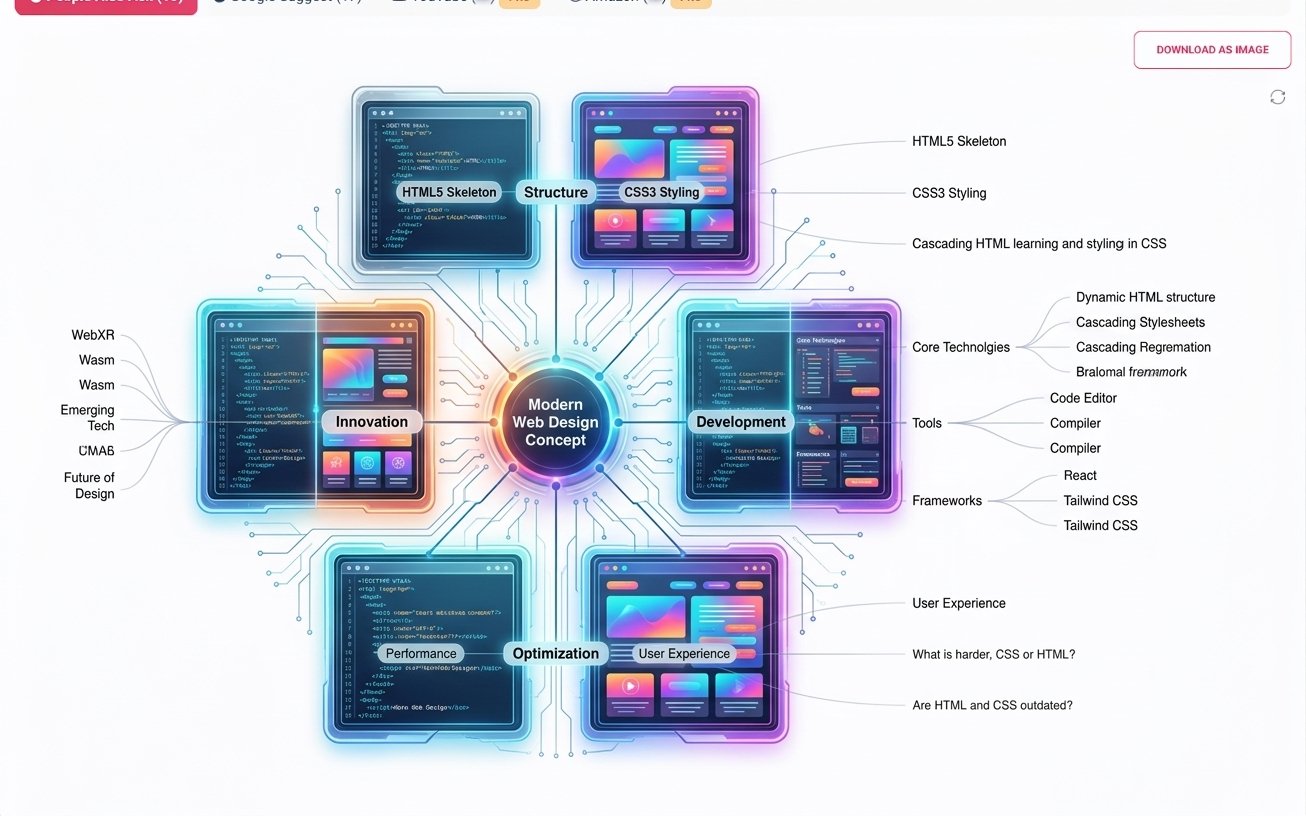
To build a successful website, it is vital to understand fundamental web development technologies, including HyperText Markup Language and Cascading Style Sheets. Newcomers often look for the difference between HyperText Markup Language and Cascading Style Sheets to learn how digital content is created and rendered in web browsers. While both languages are mutually dependent, they serve completely different purposes in web development and play an important role in modern website building. HyperText Markup Language provides an underlying structure of a webpage, whereas Cascading Style Sheets manages its visual appearance, including color palette, typography, and responsive layouts.
HyperText Markup Language is the foundation for every document on the World Wide Web, and it is a standardized markup language that uses specific elements and tags to structure content in a hierarchical manner. Without HyperText Markup Language, web browsers would not know how to distinguish headings, body paragraphs, forms, media uploads, or links.
The main purpose of HyperText Markup Language is to organize content so that both users and search engine crawlers can easily read and navigate. Understanding raw web structure is also a fundamental stage when choosing between content platforms like Shopify vs WordPress or building a custom platform per an E-Commerce Website Checklist.
Build main document sections using semantic header and footer containers
Format raw textual content using paragraph elements and heading tags
Create interactive hyperlinked text to connect internal and external web pages
Embed media files including images, audio recordings, and video players
Build data entry forms for user input and user communication
Below is an example showing how raw HyperText Markup Language structures a basic document without any visual design applied.
HTML
<!DOCTYPE HTML>
<html lang="en">
<head>
    <meta charset="UTF-8">
    <title>Pulse Digitall Web Development Guide</title>
</head>
<body>
    <h1>Welcome to Pulse Digitall Services</h1>
    <p>We provide comprehensive digital marketing and web solutions.</p>
</body>
</html>
HyperText Markup Language provides zero visual aesthetics on its own. It acts purely as a content skeleton, preparing the document for search indexing and user navigation.
Cascading Style Sheets is a style sheet language used to specify the presentation, layout, and visual formatting of documents written in HyperText Markup Language. While markup languages handle raw data, Cascading Style Sheets transforms plain text and unstructured elements into visually engaging user experiences.
Cascading Style Sheets allows web developers to decouple website design from underlying raw content. This separation improves code maintainability, reduces page load times, and allows site-wide design changes through single style modifications. A strong visual foundation directly impacts the user experience, complementing brand strategy when learning What is Brand Identity and exploring modern Logo Design Trends.
Customize background colors, text fonts, margins, and padding distances
Build complex responsive layouts using grid systems and flexible box models
Craft smooth transitions, interactive animations, and visual micro interactions
Ensure fluid responsiveness across desktop displays, tablets, and mobile smartphones
Below is an example showing how Cascading Style Sheets add visual styling and presentation to HyperText Markup Language elements.
HTML
<!DOCTYPE HTML>
<html lang="en">
<head>
    <style>
        body {
            background-color: #f4f6f9;
            font-family: Arial, sans-serif;
        }
        h1 {
            color: #0056b3;
            text-align: center;
        }
        p {
            color: #333333;
            font-size: 18px;
            text-align: center;
        }
    </style>
</head>
<body>
    <h1>Welcome to Pulse Digitall Services</h1>
    <p>We provide comprehensive digital marketing and web solutions.</p>
</body>
</html>
Cascading Style Sheets relies entirely on existing markup structure. Without HyperText Markup Language elements to style, style rules cannot render visual outputs.
Although HyperText Markup Language and Cascading Style Sheets serve different purposes, they share important foundations in modern front end web development.
Both technologies operate on the client side inside web browsers such as Chrome, Safari, or Firefox
Both follow open standards maintained by the World Wide Web Consortium
Both work together to improve accessible web navigation and search engine optimization
Both emphasize the principle of separation of concerns in digital architecture
To get a quick comparison of HyperText Markup Language and Cascading Style Sheets, the below outlines their core differences across key metrics.
Primary Purpose: HyperText Markup Language creates webpage structure and raw content hierarchy, whereas Cascading Style Sheets provides aesthetic styling, presentation, and page layouts.
Core Components: HyperText Markup Language relies on structural tags and attribute elements, whereas Cascading Style Sheets relies on element selectors, property declarations, and style values.
Syntax Structure: HyperText Markup Language uses open and close angular tag brackets, whereas Cascading Style Sheets uses block curly braces with property value declarations.
File Extensions: HyperText Markup Language files use the point html or point htm file extension, whereas Cascading Style Sheets files use the point css file extension.
Animation Capabilities: HyperText Markup Language does not support native visual animations, whereas Cascading Style Sheets natively supports keyframe animations and color transitions.
Types of Implementation: HyperText Markup Language has no sub types, whereas Cascading Style Sheets can be implemented inline, internally within style tags, or externally using stylesheet links.
Visual Rendering: HyperText Markup Language renders plain unstyled content, whereas Cascading Style Sheets renders custom colors, font typography, alignment, and grid systems.
To create a modern, user friendly website, it is essential to combine structural markup and visual styling. HyperText Markup Language acts as the structural foundation, while Cascading Style Sheets applies modern design principles, branding, and responsiveness. When combined effectively, these technologies improve user satisfaction, reduce bounce rates, and increase overall visibility in search results.
Optimizing web pages for code efficiency is equally important as technical marketing strategies. Combining solid site development with traffic acquisition strategies like Google Ads vs Facebook Ads helps businesses target high intent leads. To identify organic queries that bring targeted traffic to your optimized pages, follow our guide on How to Find Low Competition Keywords. Meanwhile, physical stores aiming to target digital traffic can follow our Local SEO Checklist and apply our Google Business Profile Optimization Guide to dominate geographical search results.
No, HyperText Markup Language is not becoming obsolete. Every single website on the internet relies on HyperText Markup Language to build document structure. Advanced web development frameworks ultimately compile down into standard HyperText Markup Language so browsers can render web pages correctly.
Nothing is replacing HyperText Markup Language as the foundational markup standard of the web. While modern frontend technologies like React, Vue, and Angular are widely used, they manipulate HyperText Markup Language rather than replacing it entirely.
Yes, learning HyperText Markup Language and Cascading Style Sheets in 2026 is completely worth it. They remain the core foundation for web developers, content strategists, and digital marketers who want full control over website design, landing pages, and technical optimization.
No, Cascading Style Sheets is not C Plus Plus[cite: 1]. C Plus Plus is a compiled, general purpose programming language used for software and system development[cite: 1]. Cascading Style Sheets is a declarative style sheet language to format and style markup documents[cite: 1].
You should always learn HyperText Markup Language first[cite: 1]. Since Cascading Style Sheets exists to style markup elements, you need a firm grasp of document structure before applying visual rules[cite: 1].
Python is generally more complex because it is a full programming language involving logic, loops, and algorithms[cite: 1]. HyperText Markup Language is a simple markup language focused on organizing content, making it much easier to learn for newcomers[cite: 1].
The seven basic structural elements commonly used in HyperText Markup Language documents are:
The html root element containing all document code
The head element storing metadata and document titles
The title element defining the page name shown in browser tabs
The body element containing visible web page content
The h1 element for main document title headings
The p element for standard body text paragraphs
The a element for hyperlinked navigation URLs
Cascading Style Sheets is generally harder to master than HyperText Markup Language[cite: 1]. While HyperText Markup Language focuses on basic structural markup[cite: 1], Cascading Style Sheets requires understanding complex visual layouts, flexbox behavior, grid alignment, specific selector hierarchy rules, and responsive screen adaptations[cite: 1].
No, HyperText Markup Language and Cascading Style Sheets are not outdated[cite: 1]. They are actively maintained standards that continually evolve with new native features, allowing developers to build highly performant, accessible web experiences without heavy external software[cite: 1].
When your website is built with clean HyperText Markup Language and responsive Cascading Style Sheets, the next step is to drive qualified user traffic through omnichannel digital marketing strategies.
To maximize revenue across social channels, marketing teams must test creative placements and scale budget allocations systematically. Comparing Instagram Reels Ads vs Story Ads helps determine which visual format generates higher engagement. When expanding core campaigns, strategies from our guide on How to Scale Facebook Ad Budgets Without Increasing CPA ensure profit stability. Furthermore, Facebook Lookalike Audience Strategies allow advertisers to target top performing audience segments, while creating an Instagram Ad Funnel for Buyers guides prospects from discovery to purchase.
Short form video and direct commerce integrations represent massive growth opportunities for online brands. Utilizing TikTok Spark Ads with Organic Content boosts authentic creator posts, while setting up a direct TikTok Shop E-Commerce Integration provides frictionless checkout experiences. E-commerce platforms can also Scale E-Commerce with Snapchat Dynamic Product Ads and implement strategies to effectively Market to Gen Z on Snapchat.
Automating customer communications accelerates lead conversion and post purchase support. Implementing Conversational Commerce on WhatsApp creates high converting messaging touchpoints. Setting up a complete WhatsApp Business API Automation Setup helps brands deliver instant order updates, automate FAQs, and nurture leads around the clock.
Building a fast loading, search optimized, and mobile responsive website requires expert knowledge of clean HyperText Markup Language and optimized Cascading Style Sheets. To supplement technical design, establishing strong visual branding is essential, which you can learn about in our guide on How to Create a Brand Identity That Stands Out.
At Pulse Digitall, our team of expert developers and digital marketing specialists crafts customized digital solutions tailored to your business goals. Whether you need a fully custom coded platform, WordPress optimization, local search engine optimization, or complete website redesigns, Pulse Digitall provides results driven web services. Contact Pulse Digitall today to elevate your online presence and scale your business digitally.